Know Before You Go: A Real-Talk Guide to Every Prenatal Test You'll Encounter
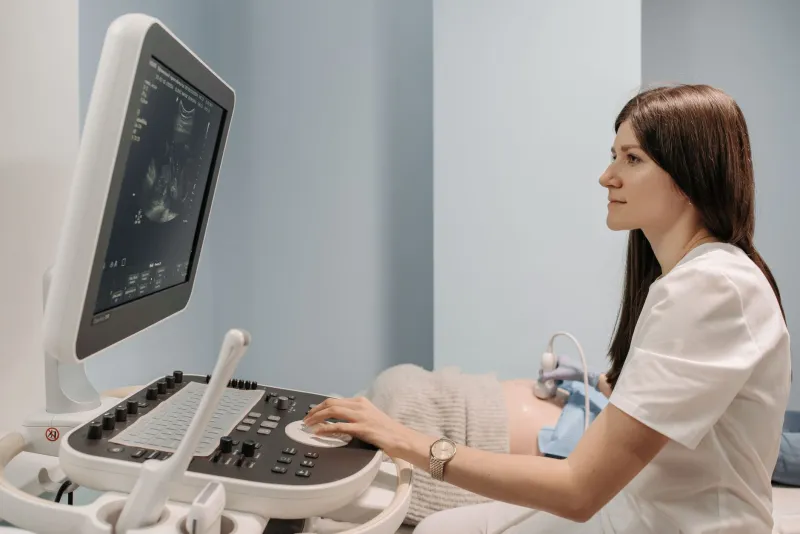
Let's be honest—the first time your OB hands you a printed schedule of upcoming prenatal tests, it can feel a little overwhelming. Blood draws, ultrasounds, genetic panels, glucose drinks that taste like flat soda... what is all of this, and why does it matter? The good news is that each of these tests exists for a real reason, and understanding what they're looking for can turn anxiety into confidence.
At PregnantSure, we believe knowledge is one of the best tools you have during pregnancy. So let's walk through the major prenatal screening and diagnostic tests—what they measure, when they happen, and how to use the results to make decisions that feel right for you and your family.
First Trimester: Weeks 8–13
Cell-Free DNA Screening (NIPT)
Non-invasive prenatal testing—commonly called NIPT—is a blood draw that analyzes tiny fragments of fetal DNA circulating in your bloodstream. It's typically offered between weeks 10 and 13 and screens for chromosomal conditions like Down syndrome (trisomy 21), trisomy 18, trisomy 13, and certain sex chromosome abnormalities.
Important caveat: NIPT is a screening test, not a diagnostic one. A high-risk result doesn't mean your baby definitely has a chromosomal condition—it means the probability is elevated and further testing may be recommended. Accuracy is generally very high for trisomy 21, but false positives do occur, particularly in lower-risk pregnancies.
First-Trimester Combined Screening
This two-part screening combines a blood test (measuring pregnancy-associated plasma protein-A and hCG) with a specialized ultrasound called a nuchal translucency (NT) scan. The NT scan measures fluid at the back of the baby's neck—thicker measurements can sometimes indicate chromosomal differences or heart conditions.
Results are expressed as a probability ratio rather than a yes-or-no answer. Your provider will factor in your age, the blood markers, and the NT measurement to give you an overall risk assessment.
Second Trimester: Weeks 14–27
Anatomy Scan (20-Week Ultrasound)
This is the big one most parents look forward to—and yes, this is often when you can find out the baby's sex if you want to know. But beyond that exciting moment, the anatomy scan is a detailed structural survey of your baby's development. Technicians examine the brain, heart, spine, kidneys, limbs, and more, checking that everything is developing on track.
The scan also evaluates placenta placement, amniotic fluid levels, and fetal growth. If anything looks unusual, your provider may refer you to a maternal-fetal medicine specialist (MFM) for a higher-resolution look.
Quad Screen
If you didn't do NIPT or first-trimester screening, the quad screen (offered between weeks 15 and 20) measures four substances in your blood: AFP, hCG, estriol, and inhibin A. Together, these markers help assess the likelihood of neural tube defects like spina bifida, as well as chromosomal conditions.
Like the first-trimester screen, this is a probability-based result. An abnormal result opens the door to more specific follow-up, not a definitive diagnosis.
Glucose Challenge Test
Around weeks 24 to 28, you'll be asked to drink a sugary solution and have your blood drawn an hour later. This screens for gestational diabetes by measuring how efficiently your body processes glucose. If your result comes back above the threshold (usually 130–140 mg/dL, depending on your provider), you'll move on to the three-hour glucose tolerance test for a more complete picture.
Gestational diabetes is manageable with diet, monitoring, and sometimes medication—catching it early makes a real difference in outcomes for both you and your baby.
Diagnostic Tests: A Different Category Entirely
It's worth pausing here to clarify something that trips a lot of people up: screening tests and diagnostic tests are not the same thing.
Screening tests assess risk. Diagnostic tests provide a definitive answer. If a screening result comes back high-risk, your provider may offer one of the following:
Chorionic Villus Sampling (CVS)
Performed between weeks 10 and 13, CVS involves removing a small sample of placental tissue to analyze fetal chromosomes directly. It carries a small but real miscarriage risk (roughly 0.5–1%), so it's typically offered when there's a specific concern or elevated risk.
Amniocentesis
Usually done between weeks 15 and 20, amniocentesis draws a small amount of amniotic fluid for chromosomal and genetic analysis. Like CVS, it's a diagnostic tool with a low but present risk of pregnancy loss. Many families choose it when they want a definitive answer before making care decisions.
Third Trimester: Weeks 28–40
Group B Strep (GBS) Screening
Between weeks 35 and 37, your provider will swab the vagina and rectum to test for Group B Streptococcus, a common bacteria that's harmless in adults but can be dangerous to newborns during delivery. If you test positive, you'll receive IV antibiotics during labor—a simple and highly effective prevention measure.
Nonstress Test (NST) and Biophysical Profile (BPP)
These tests monitor fetal well-being, typically in the third trimester if you have a high-risk pregnancy, go past your due date, or your provider has concerns about fetal movement. The NST tracks the baby's heart rate in response to movement; the BPP adds an ultrasound assessment of breathing, movement, muscle tone, and fluid levels.
How to Make Decisions That Feel Right for You
Here's something your paperwork won't always tell you: you have the right to decline any screening test. These tests are offered, not mandated. Some families want as much information as possible; others prefer to let pregnancy unfold without statistical probabilities shaping their experience. Both approaches are valid.
If you're unsure, ask your provider:
- What would we do differently based on this result?
- Is this a screening test or a diagnostic one?
- What are the false-positive and false-negative rates?
Genetic counselors are also an incredible (and underutilized) resource, especially if you have a family history of genetic conditions or receive an unexpected result. Many hospital systems offer telehealth genetic counseling, making it more accessible than ever.
Prenatal testing isn't about finding things to worry about—it's about gathering information so you can make the best choices for your pregnancy, your baby, and your family. And knowing what's coming? That's a pretty powerful place to start.