Moving Through the Aches: How to Actually Exercise During Pregnancy When Your Body Feels Like a Stranger
Somewhere between your OB cheerfully recommending 150 minutes of moderate activity per week and you wincing every time you stand up too fast, something got lost in translation. The "stay active" advice is real, it's evidence-based, and it genuinely matters for you and your baby. But nobody seems to hand out a manual for how to actually do that when your hips ache, your center of gravity has relocated to another zip code, and your pelvic floor has opinions about everything.
Let's fix that.
Why Exercise During Pregnancy Is Worth the Effort
The American College of Obstetricians and Gynecologists (ACOG) isn't just saying "stay active" to keep you busy. Regular, moderate exercise during an uncomplicated pregnancy is linked to lower rates of gestational diabetes, reduced risk of preeclampsia, shorter labor, and better postpartum recovery. It also does real work on mood — which, given that anxiety and depression affect a significant number of pregnant people, is not a small thing.
Beyond the clinical benefits, movement helps manage some of the most annoying symptoms of pregnancy: constipation, swelling, back pain, and the general feeling of being slowly taken over by a tiny but very demanding roommate. So yes, your OB means it. But the "how" matters enormously.
The Workouts That Actually Hold Up Under Scrutiny
Not all exercise is created equal when you're pregnant, and the research is clearer on some activities than others.
Walking is the most universally recommended option for a reason — it's low-impact, adjustable, and requires zero equipment beyond a decent pair of supportive shoes. A 30-minute walk most days of the week checks the ACOG box without putting your joints through the wringer.
Swimming and water aerobics are genuinely underrated. The buoyancy takes pressure off your joints, reduces swelling, and lets you move in ways that would be uncomfortable on land. Many YMCAs and community centers across the US offer prenatal water fitness classes specifically — worth looking into.
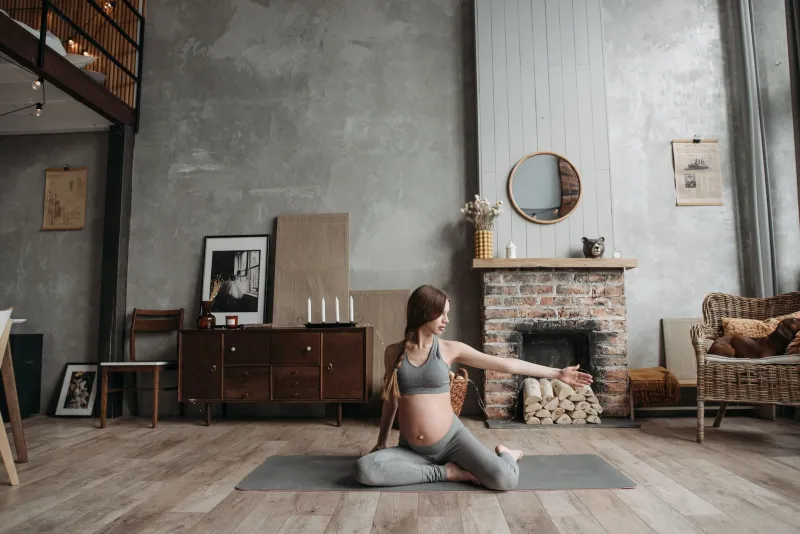
Prenatal yoga builds flexibility, teaches breathing techniques that'll actually come in handy during labor, and addresses balance and core stability in a pregnancy-appropriate way. Look for classes specifically labeled "prenatal" — standard yoga poses like deep twists, full inversions, and lying flat on your back for extended periods aren't ideal during the second and third trimesters.
Strength training doesn't have to stop when you get pregnant. Modified versions of resistance work — lighter weights, higher reps, seated or supported variations — help maintain muscle mass and support the extra load your body is carrying. Focus on functional movements: rows, modified squats, resistance band work, and supported lunges.
Stationary cycling is a solid cardio option that eliminates fall risk (which becomes a real concern as balance shifts) while still getting your heart rate up.
How to Modify as Your Body Changes
Here's the thing about pregnancy exercise: what works at 10 weeks is not what works at 30 weeks. Expect to adapt, and don't interpret "I have to scale back" as failure.
First trimester: Fatigue and nausea are the main obstacles. Honor them. If your pre-pregnancy routine involved running or group fitness classes, you can often continue — just tune into how you feel. This isn't the time to start an intense new program from scratch.
Second trimester: Many people feel better and more energetic. But this is also when your belly starts affecting balance and your ligaments loosen thanks to relaxin (the hormone, not a vibe). Avoid exercises that require significant balance on one leg without support, and start phasing out anything that has you lying flat on your back for long periods — that position can compress a major vein and reduce blood flow.
Third trimester: Modifications become more significant. Lower your intensity. Shorten your sessions if needed. Prioritize movements that support your lower back and pelvic floor. Wide-legged positions can help accommodate your bump. And honestly? A 20-minute walk still counts.
General rules of thumb: avoid contact sports, activities with high fall risk (skiing, horseback riding, mountain biking), and anything that involves jumping or rapid direction changes if it causes discomfort.
The Pain Question: What's Normal and What's Not
This is where things get genuinely confusing, because pregnancy comes with so many new sensations that it's hard to know what to flag.
Normal discomfort you can work through:
- Muscle fatigue during or after exercise (that's just your muscles doing their job)
- Mild breathlessness that still lets you hold a conversation
- General third-trimester heaviness and slowness
- Braxton Hicks contractions that stop when you rest
Stop what you're doing and rest:
- Sharp or stabbing pain anywhere
- Pelvic pressure that feels like something is falling out
- Pain or discomfort in your pubic symphysis (the front center of your pelvis) — this can indicate a condition called symphysis pubis dysfunction, which needs modification and sometimes physical therapy
- Significant shortness of breath beyond what's proportional to your effort
- Dizziness or feeling faint
Stop and call your provider:
- Regular, rhythmic contractions that don't ease up
- Vaginal bleeding or fluid leaking
- Decreased fetal movement after exercise
- Chest pain or heart palpitations
- Calf pain or swelling (can indicate a blood clot, which pregnant people are at higher risk for)
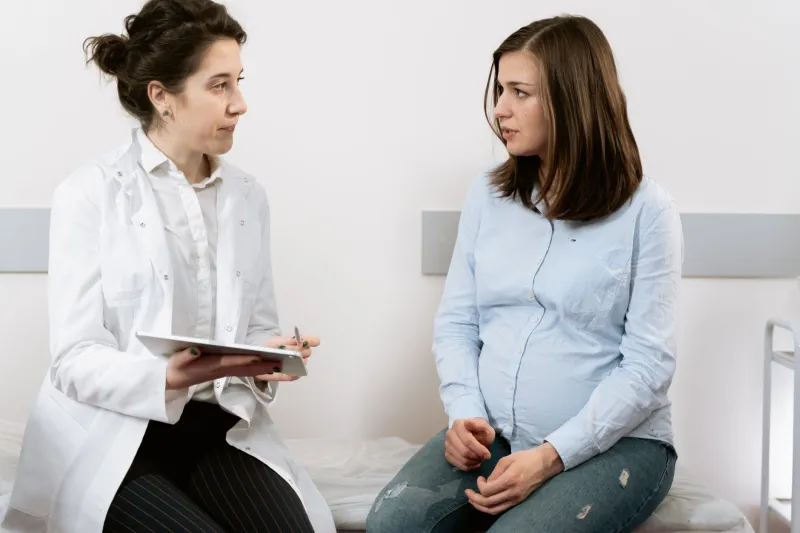
If something feels wrong, it probably warrants a call. Your OB's office has heard everything — you're not being dramatic.
A Note on Pelvic Floor (Because Someone Has to Say It)
Your pelvic floor is doing a heroic amount of work right now. Leaking a little when you sneeze or jump? That's not just "part of pregnancy" you have to accept — it's a sign your pelvic floor could use some attention. A pelvic floor physical therapist can be genuinely transformative during pregnancy, and many insurance plans cover it. Ask your OB for a referral if you're experiencing any leaking, pressure, or pain with movement.
Making It Sustainable
The goal isn't to maintain your pre-pregnancy fitness level or hit some performance benchmark. The goal is consistent, gentle movement that supports your health and helps you feel a little more like yourself. Some days that's a prenatal yoga class. Some days it's a slow walk around the block. Both count.
Give yourself permission to listen to your body more than you listen to any app, any fitness influencer, or any well-meaning relative who swears they ran a 5K at 38 weeks. Your pregnancy is your own. Move in a way that feels good — and stop when it doesn't.